

Why Single Points of Failure Are Unacceptable in IoT Connectivity
Single points of failure are unacceptable in mission-critical IoT deployments.
When your devices track high-value assets, monitor patient health, process payments, or control industrial equipment, connectivity loss is not just an inconvenience. It is a business failure.
Multi-network SIMs remove this risk by enabling devices to connect across multiple mobile operators. If one network fails or has a coverage gap, the SIM switches to an alternative network automatically.
This guide explains how multi-network SIMs work, when redundancy matters, and how to evaluate different approaches.
Single-Network SIMs: The Risk
Traditional SIM cards connect to a single mobile network operator. Each SIM contains one IMSI that links it to that operator’s network.
This creates several limitations:
- Devices can only connect to one network
- Coverage gaps result in lost connectivity
- Network outages cause complete service interruption
- Congestion leads to degraded performance
- There is no failover or redundancy
Real-World Impact
Vehicle fleet tracking
A fleet operator deploys 5,000 trackers using a single operator with strong urban coverage but weak rural reach.
Result: 15 percent of vehicles lose visibility on rural routes, affecting dispatch and customer service.
Payment terminals
A retailer deploys 1,000 terminals on one network. A regional outage affects 20 percent of the UK for four hours.
Result: 200 terminals cannot process payments, leading to lost revenue and customer frustration.
Medical alert devices
A healthcare provider deploys 10,000 devices on one network with poor indoor penetration.
Result: 500 devices struggle to connect reliably, creating patient safety risks and compliance concerns.
Multi-Network SIMs: How They Work
Multi-network SIMs, often called multi-IMSI SIMs, store multiple operator profiles on a single SIM. This allows devices to switch between networks based on availability and performance.
Technical Architecture
Single IMSI SIM
- One IMSI
- Connected to one operator only
Multi-IMSI SIM
- Multiple IMSIs stored on the SIM
- Ability to switch between operators
- Example: UK and international operator profiles on one SIM
Switching Logic
The SIM evaluates:
- Signal strength
- Network availability
- Configured priority
- Connection success
Failover Process
- Primary network fails
Signal is lost, connections fail, or access is rejected - Network scan
SIM searches for alternative available networks - Network switch
SIM changes IMSI and connects to a new operator - Resume operation
Device reconnects and continues transmitting data - Optional reversion
Some SIMs return to the primary network when available
Failover Time
- Under 10 seconds: strong performance
- 10 to 30 seconds: acceptable for most use cases
- Over 30 seconds: likely to impact operations
Types of Multi-Network Solutions
Domestic multi-network
Multiple operators within a single country
Example: UK SIM with Vodafone, EE, and O2
Use case: consistent national coverage
Regional multi-network
Coverage across a region such as Europe
Use case: cross-border deployments
Global multi-network
Coverage across many countries worldwide
Use case: international fleets and logistics
Benefits of Multi-Network SIMs
Coverage redundancy
Combining multiple operators reduces coverage gaps and improves overall availability.
Network resilience
Devices remain connected during outages by switching to alternative networks.
Performance optimisation
Devices can move to a better-performing network when congestion occurs.
Geographic flexibility
Devices can operate across borders without changing SIMs.
Vendor independence
Connectivity can be managed without being locked to a single operator.
When Multi-Network Matters
Mission-critical applications
- Medical devices
- Payment terminals
- Industrial control systems
In these environments, connectivity directly impacts safety, revenue, or operations.
Mobile deployments
- Vehicle fleets
- Asset tracking
- Portable devices
Movement across regions makes single-network coverage unreliable.
High-value assets
When asset value or operational risk is high, redundancy becomes commercially justified.
Challenging environments
- Rural locations
- Indoor deployments
- High-density urban areas
Different operators perform differently in each environment.
When Single-Network Is Acceptable
Low-risk applications
Non-critical use cases where occasional downtime has minimal impact.
Static deployments with proven coverage
Environments where signal strength has been validated.
Early-stage pilots
Short-term testing where reliability trade-offs are acceptable.
Cost Considerations
Typical multi-network premium:
- SIM cost: minimal difference
- Monthly cost: around £1 to £3 extra per SIM
Example
Single-network: £5 per SIM per month
Multi-network: £7 per SIM per month
For 1,000 SIMs: £24,000 additional annual cost
ROI perspective
For many deployments, avoiding even a single outage can justify the cost.
Evaluating Multi-Network Solutions
Key questions to ask:
How many networks are included?
At least two per market, ideally three for resilience
Which operators are included?
Request specific network names, not general claims
What is the failover time?
Under 30 seconds is acceptable, under 10 seconds for critical use
Is failover automatic?
Automatic switching is essential
Does the SIM revert to the primary network?
Important for cost and control
Can network priority be configured?
Useful for balancing cost and performance
Are there additional roaming charges?
Ensure pricing is transparent
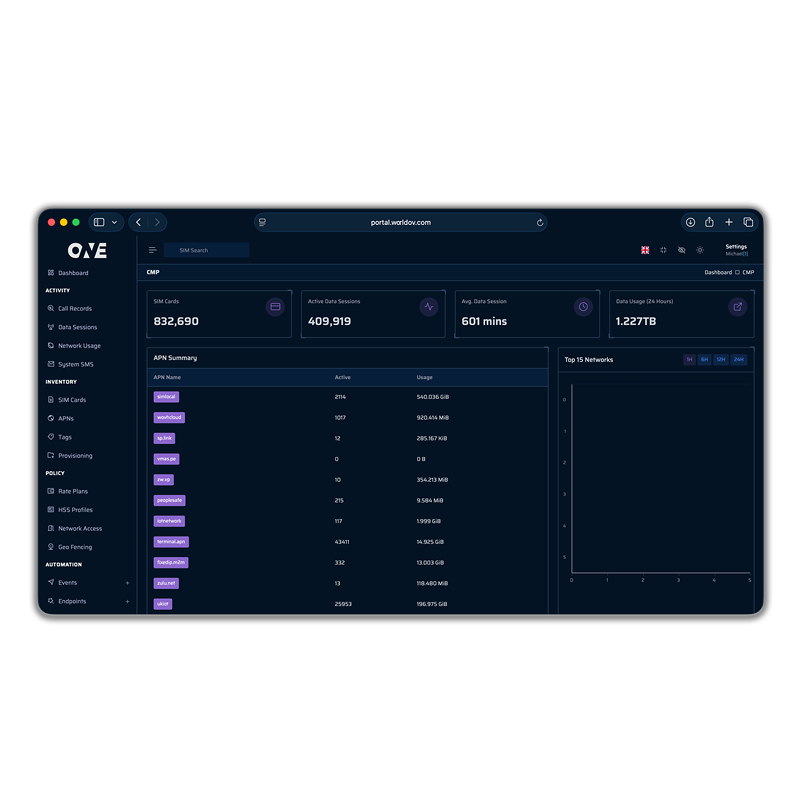

OV Multi-Network Connectivity
OV provides multi-network IoT connectivity designed for reliability and control.
- Multi-network access across 180+ countries and 600+ networks
- Multi-IMSI architecture enabling dynamic network selection
- Automatic failover to maintain device connectivity
- Configurable network policies through the OV ONE platform
- Transparent pricing models with clear cost visibility
OV ONE gives teams full control of their connectivity estate from a single interface, enabling monitoring, configuration, and optimisation at scale .
Final Takeaway
If connectivity failure creates operational, financial, or safety risk, single-network SIMs are a structural weakness.
Multi-network SIMs are not just a feature. They are a fundamental requirement for resilient IoT deployments.
The decision is not about cost alone. It is about whether your connectivity layer can support the real-world conditions your devices operate in.


