An IoT SIM card is a specialized subscriber identity module designed specifically for connected devices in the Internet of Things. Unlike consumer mobile SIMs, IoT SIMs are built to support devices that operate autonomously—often for years—in diverse environments ranging from shipping containers to medical devices to industrial sensors.
While they perform the same fundamental function as regular SIM cards (authenticating devices on cellular networks and enabling data transmission), IoT SIMs are engineered to withstand different operating conditions, support global deployments, and integrate with connectivity management platforms that let businesses monitor and control thousands or millions of devices remotely.
Understanding what makes an IoT SIM different—and why those differences matter—is essential for anyone deploying connected devices at scale.
What Is an IoT SIM Card?
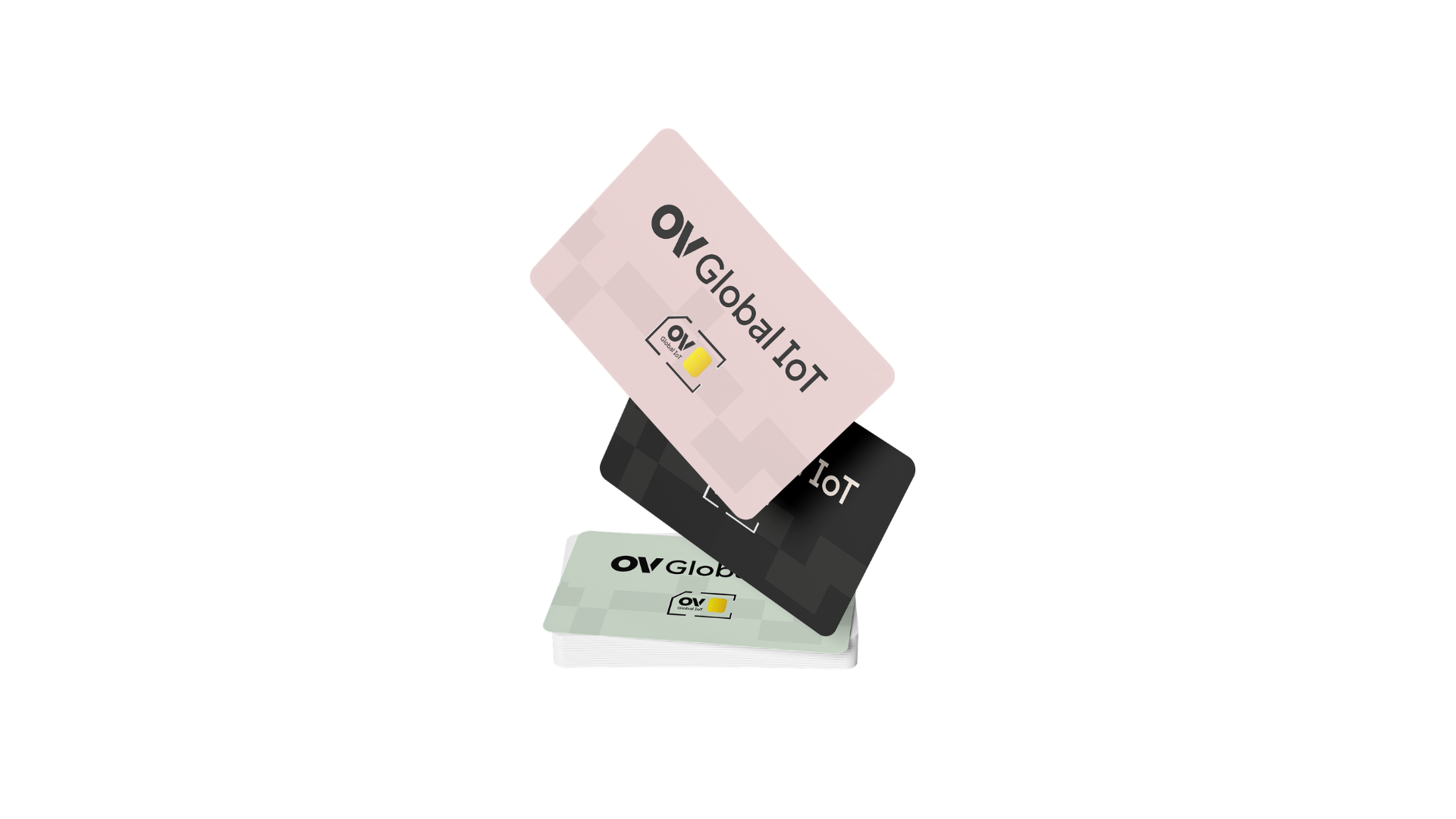
An IoT SIM card is a subscriber identity module specifically designed for machine-to-machine (M2M) and IoT applications, featuring enhanced durability, extended temperature ranges, remote management capabilities, and support for multiple network profiles to enable reliable connectivity for connected devices operating autonomously in varied environments.
IoT SIMs come in three primary form factors:
- Standard SIM — Traditional removable card (2FF, 3FF, 4FF sizes)
- Industrial-grade SIM— Hardened for extreme conditions (-40°C to +105°C)
- Embedded SIM (eSIM/MFF2) – Soldered directly onto device circuit boards
The key differentiator is not just the physical form factor, but the capabilities: multi-network support (via Multi-IMSI or eUICC), remote provisioning, extended lifecycle (10-15 years vs 2-3 years for consumer SIMs), and integration with IoT connectivity management platforms.
How Does an IoT SIM Card Work?
1. Device Authentication
When an IoT device powers on, the SIM card performs mutual authentication with the mobile network:
- The device reads the International Mobile Subscriber Identity (IMSI) stored on the SIM
- The SIM sends authentication credentials to the network
- The network verifies the credentials against its Home Location Register (HLR)
- Once authenticated, the device is assigned an IP address and can begin transmitting data
This process happens automatically—no user intervention required.
2. Network Connection and Roaming
IoT SIMs establish connectivity through one of two models:
Single-Network SIMs:
- Tied to one mobile network operator (MNO)
- Rely on roaming agreements when deployed internationally
- Lower cost but limited coverage flexibility
Multi-IMSI SIMs:
- Store multiple network profiles on a single SIM
- Automatically switch between local networks based on signal strength and availability
- Provide redundancy and improved global coverage
When a device with a Multi-IMSI SIM moves between regions or encounters weak signal, it can switch to a different network profile without manual configuration—critical for applications like asset tracking or global logistics.
3. Data Transmission
Once connected, the IoT SIM facilitates data transmission:
- Uplink: Device sends sensor data, location updates, or status reports to the cloud platform
- Downlink: Platform sends commands, firmware updates, or configuration changes to the device
Data plans for IoT SIMs are typically structured differently than consumer plans:
- Pooled data across device fleets (shared quota)
- Low-volume tiers (some devices transmit only kilobytes per month)
- Pay-as-you-go or fixed-cost models depending on use case
4. Remote Management
IoT SIMs integrate with connectivity management platforms (CMPs) that allow businesses to:
- Monitor real-time connection status across all deployed devices
- Activate, suspend, or deactivate SIMs remotely
- Set data usage limits and receive alerts
- Provision new devices at scale via API
- Update network profiles over-the-air (for eSIMs with eUICC)
This remote management capability is what makes IoT SIMs fundamentally different from consumer SIMs—they’re designed to be managed programmatically across large device fleets, not individually by end users.
IoT SIM vs Regular SIM: Key Differences
The most critical difference: IoT SIMs are designed to operate unattended for years in environments and applications where replacement or manual intervention is impractical or impossible.
Types of IoT SIM Cards
1. Standard IoT SIM (Removable)
Traditional plastic card in 2FF (mini), 3FF (micro), or 4FF (nano) sizes.
Best for:
- Devices with accessible SIM slots
- Applications requiring easy SIM replacement
- Prototyping and testing
Limitations:
- Physical durability concerns in harsh environments
- Risk of dislodgement in high-vibration applications
- Easier for unauthorized SIM swapping
2. Industrial-Grade SIM
Hardened removable SIM built to withstand extreme conditions.
Features:
- Extended temperature range (-40°C to +105°C)
- Increased read/write cycle endurance
- Vibration and shock resistance
- Longer guaranteed lifespan (10-15 years)
Best for:
- Outdoor deployments (weather stations, agricultural sensors)
- Industrial equipment (factory automation, mining)
- Transportation and logistics (fleet tracking, cold chain monitoring)
3. Embedded SIM (eSIM / MFF2)
Soldered directly onto device circuit boards during manufacturing.
Features:
- Physically cannot be removed (enhanced security)
- No mechanical failure risk from vibration
- Smallest form factor (saves device PCB space)
- Supports eUICC for remote SIM profile management
Best for:
- Devices where SIM access is impractical (wearables, medical implants)
- High-security applications
- Global deployments requiring network flexibility
- Long lifecycle devices (smart meters, infrastructure sensors)
4. Multi-IMSI SIM
SIMs containing multiple network operator profiles.
How it works:
- Stores 2-10+ IMSI profiles from different MNOs
- Device automatically selects strongest available network
- Provides redundancy and improved global coverage
Best for:
- Global asset tracking
- Roaming-heavy applications
- Mission-critical devices requiring maximum uptime
Common Use Cases for IoT SIM Cards
Asset Tracking and Logistics
Application: GPS trackers on shipping containers, vehicles, high-value cargo
Why IoT SIMs:
- Multi-network connectivity ensures tracking across international routes
- Low-power modes (NB-IoT, LTE-M) extend battery life
- Remote management allows deactivation of lost/stolen trackers
Example: A shipping company tracking containers from Shanghai to Rotterdam needs SIMs that automatically connect to local networks in each port without manual reconfiguration.
Fleet Management and Telematics
Application: Vehicle tracking, driver behaviour monitoring, route optimization
Why IoT SIMs:
- Real-time data transmission for GPS location and vehicle diagnostics
- High reliability for safety-critical applications
- Integration with fleet management platforms via API
Smart Meters and Utilities
Application: Electricity, gas, and water consumption monitoring
Why IoT SIMs:
- 10-15 year lifespan matches meter replacement cycles
- Low data consumption (monthly meter readings)
- Remote management eliminates need for field technician visits
Point-of-Sale (POS) Systems
Application: Card payment terminals, mobile POS devices
Why IoT SIMs:
- Redundant connectivity ensures payment transactions never fail
- Compliance with PCI-DSS security standards
- Failover to cellular when Wi-Fi/Ethernet drops
Healthcare and Medical Devices
Application: Remote patient monitoring, connected medical equipment
Why IoT SIMs:
- Reliable connectivity for life-critical data transmission
- Secure, compliant data handling
- Global coverage for international medical equipment deployments
Smart Cities and Infrastructure
Application: Connected streetlights, parking sensors, environmental monitors
Why IoT SIMs:
- Long deployment lifecycles (10+ years)
- Low maintenance requirements
- Centralised management for thousands of sensors
How to Choose the Right IoT SIM
1. Coverage Requirements
Questions to ask:
- Where will devices be deployed? (Single country, regional, or global?)
- Do devices move between locations? (Stationary sensors vs mobile trackers)
- What network technologies are required? (2G, 3G, 4G LTE, NB-IoT, LTE-M, 5G)
Recommendation:
- Single-country deployments: Local MNO SIM may be sufficient
- Regional/global deployments: Multi-IMSI or eSIM with eUICC for flexibility
- Mobile applications: Multi-network SIMs for continuous connectivity
2. Environmental Conditions
Questions to ask:
- What temperature range will devices operate in?
- Will devices be exposed to vibration, shock, moisture, or dust?
- How accessible is the SIM slot after deployment?
Recommendation:
- Harsh environments: Industrial-grade or embedded SIM (MFF2)
- Standard conditions: Standard IoT SIM acceptable
- Inaccessible deployments: eSIM to avoid physical replacement needs
3. Data Usage Patterns
Questions to ask:
- How much data will each device transmit? (Bytes per day vs gigabytes per month)
- Is usage predictable or variable?
- Do you need pooled data across device fleet or per-device limits?
Recommendation:
- Low data (sensors): NB-IoT or LTE-M compatible SIMs with pay-per-MB pricing
- Moderate data (trackers): Pooled data plans with overage protection
- High data (video): 4G/5G SIMs with dedicated data allowances
4. Management and Scalability
Questions to ask:
- How many devices are you deploying? (10s, 1000s, or millions?)
- Do you need API integration with your platform?
- What level of remote control is required? (Activate/deactivate only, or full provisioning?)
Recommendation:
- Small deployments (<100 devices): Basic web portal management acceptable
- Large deployments (1000+ devices): API-driven connectivity management platform essential
- Dynamic deployments: eSIM with eUICC for remote network profile updates
5. Security Requirements
Questions to ask:
- Are you transmitting sensitive data? (Payment info, health data, location)
- Do you need to prevent SIM swapping or cloning?
- What compliance standards apply? (PCI-DSS, HIPAA, GDPR)
Recommendation:
- High-security applications: Embedded SIM (cannot be physically removed)
- Standard applications: IMEI lock + private APN for network isolation
- Compliance-heavy sectors: Choose providers with relevant certifications
IoT SIM Card Providers: What to Look For
When evaluating IoT SIM providers, prioritize:
1. True MNO vs MVNO
MNO (Mobile Network Operator):
- Owns core network infrastructure
- Direct control over connectivity and performance
- Better SLA guarantees and support for mission-critical applications
MVNO (Mobile Virtual Network Operator):
- Resells capacity from MNOs
- May have less control over network prioritization
- Can be cost-effective for less critical applications
OV is a true MNO with owned infrastructure across 180+ countries and 600+ networks—this means direct control over network performance and the ability to offer genuine multi-network redundancy without relying on third-party roaming agreements.
2. Global Coverage
Verify:
- Network coverage in your deployment regions
- Quality of roaming agreements (for single-IMSI SIMs)
- Local presence and support in key markets
3. Connectivity Management Platform
Essential features:
- Real-time visibility into device status and data usage
- API for programmatic SIM lifecycle management
- Alerts and automation rules
- Historical data and reporting
4. Data Plan Flexibility
Look for:
- Pooled data options to optimize costs across device fleets
- Ability to change plans without SIM replacement
- Transparent overage policies
- Grace periods for testing and prototyping
5. Support and SLAs
Evaluate:
- 24/7 technical support availability
- Uptime guarantees (look for 99.5%+ SLAs)
- Response time commitments
- Local support for international deployments
Common Challenges with IoT SIM Cards
Challenge 1: 2G/3G Network Shutdowns
Problem: Many legacy IoT devices were built for 2G/3G networks, which are being decommissioned globally.
Solution:
- Migrate to LTE-M or NB-IoT (designed for long IoT device lifecycles)
- Use eSIM with eUICC to remotely update network profiles as networks evolve
- Plan for 4G/5G compatibility in new device designs
Challenge 2: Roaming Cost Unpredictability
Problem: International roaming charges can be complex and expensive, especially for devices crossing borders frequently.
Solution:
- Use Multi-IMSI SIMs to connect as “local” devices rather than roaming
- Choose providers with transparent, fixed-rate global pricing
- Set data caps and alerts in connectivity management platform
Challenge 3: SIM Lifecycle Management at Scale
Problem: Manually activating, monitoring, and deactivating thousands of SIMs is impractical.
Solution:
- API-driven connectivity platforms for automated provisioning
- Bulk operations (activate 1000 SIMs with one API call)
- Integration with device manufacturing and supply chain systems
Challenge 4: Security Threats
Problem: Unauthorised SIM swapping, cloning, or data interception.
Solution:
- IMEI lock (binds SIM to specific device hardware)
- Private APN for network isolation
- Embedded SIMs (cannot be physically removed)
- IoT SAFE for cryptographic authentication
The Future of IoT SIMs: eSIM and iSIM
eSIM (Embedded SIM) with eUICC
What it is: A SIM chip soldered to the device board that supports eUICC (embedded Universal Integrated Circuit Card), enabling remote SIM profile management.
Key benefits:
- Over-the-air network profile updates (no physical SIM swap needed)
- Switch carriers without hardware changes
- Smaller, more durable than removable SIMs
Adoption: Rapidly becoming standard for new IoT device designs, especially in automotive, wearables, and industrial applications.
iSIM (Integrated SIM)
What it is: SIM functionality integrated directly into the device’s main processor chip (System on Chip).
Key benefits:
- Even smaller footprint than eSIM
- Lower power consumption
- Enhanced security (harder to tamper with)
Status: Emerging technology; early deployments in select applications, but not yet widely available.
OV supports both traditional SIMs and eSIM with eUICC, allowing you to choose the right solution for your specific use case and device architecture.
Conclusion: Why IoT SIM Cards Matter
IoT SIM cards are the invisible infrastructure enabling billions of connected devices to communicate reliably across the globe. Unlike consumer SIMs designed for smartphones, IoT SIMs are purpose-built for:
- Long-term autonomous operation (10-15 year lifecycles)
- Harsh environmental conditions (extreme temperatures, vibration, outdoor exposure)
- Global deployments (multi-network support, seamless international connectivity)
- Remote management at scale (API-driven provisioning, real-time monitoring)
- Mission-critical applications (payment terminals, medical devices, safety systems)
Whether you’re deploying 10 sensors or 10 million connected devices, choosing the right IoT SIM—and the right connectivity provider—is fundamental to your deployment’s success.
Key takeaways:
- IoT SIMs differ from consumer SIMs in durability, lifespan, management capabilities, and network flexibility
- Multi-IMSI and eSIM technologies provide redundancy and global coverage advantages
- Choose industrial-grade or embedded SIMs for harsh environments or long deployments
- API-driven connectivity management platforms are essential for deployments beyond 100 devices
- Working with a true MNO (vs MVNO) provides greater control, reliability, and support for mission-critical applications
Ready to Deploy IoT Devices?
OV provides IoT SIM solutions for deployments of any scale—from pilot projects to global rollouts of millions of devices. As a true MNO with owned infrastructure across 180+ countries and 600+ networks, we offer:
- Multi-network IoT SIMs (Multi-IMSI for automatic network selection)
- eSIM with eUICC (remote provisioning and carrier switching)
- Industrial-grade SIMs (10-15 year lifecycle, -40°C to +105°C)
- OV ONE connectivity management platform (API-driven, real-time visibility)
- Global coverage with local support (Sub-Saharan Africa, North America, Europe, LATAM, APAC, Middle East)
Get started with a free IoT SIM trial or if you have questions about IoT SIM selection for your specific use case, book a Technical Consultation here.

About the Author:
Josh Price, Pre Sales and Product Manager at OV.